Happiness is lino shaped
Printing is something I have wanted to have a proper go at, since being a teacher in Luton and doing lino prints with my students there. I've been lucky enough to receive contributions to my art career for this Jingly season and today I purchased the items below.
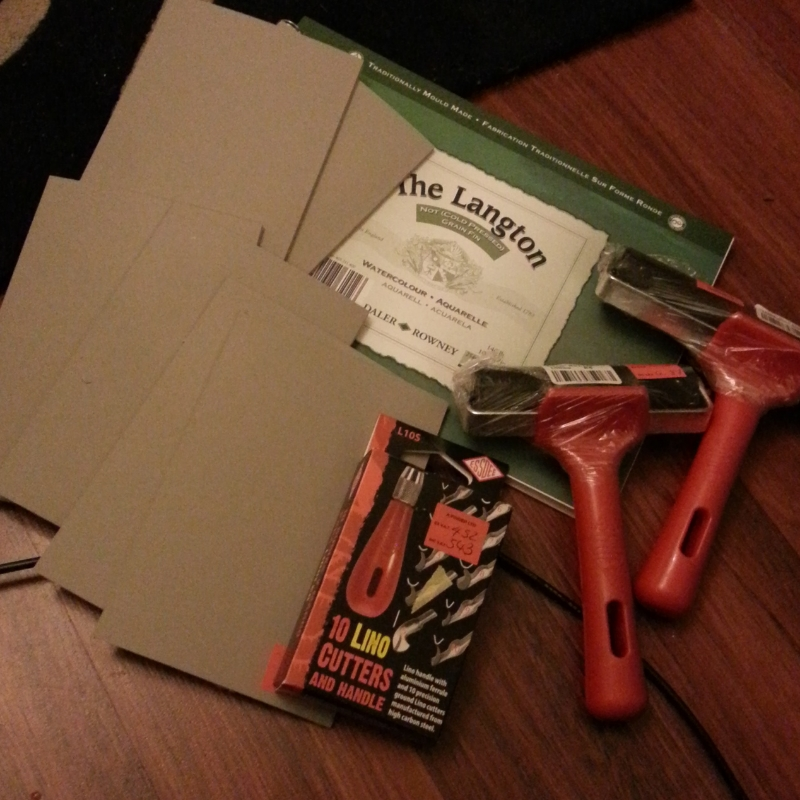
I'd be working with them right now if I didn't need to sleep ever.
On an aside, having to work in short bursts has been a real challenge for me. I'm use to working on numerous paintings at a time over a period of weeks. This is no longer possible due to minor things like life getting in the way. So I'm working smaller and quicker. This is todays offering.
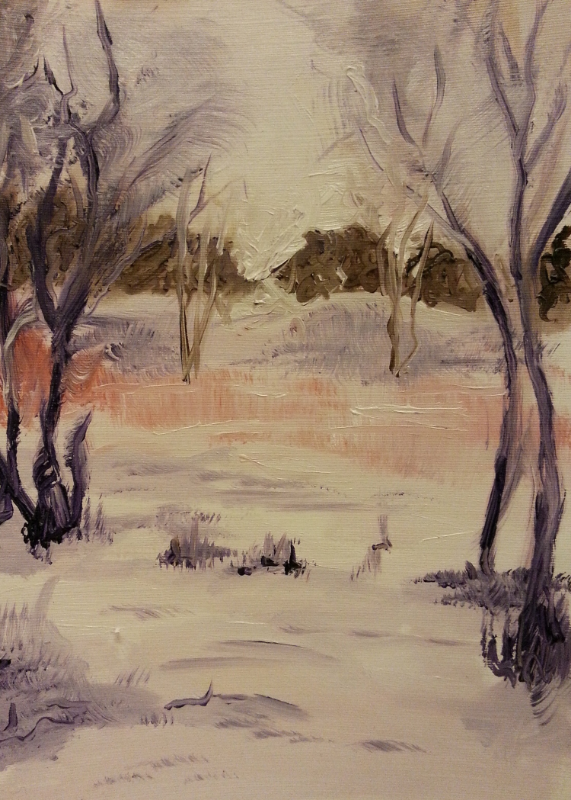
'A titanium nod towards dawn' oil on oil painting paper, 10" x 7 ".
It's a painting of a the Peak Districts in Sheffield during the winter of 2013. It's from a photograph I took.
2015 Year of 'do all the things'
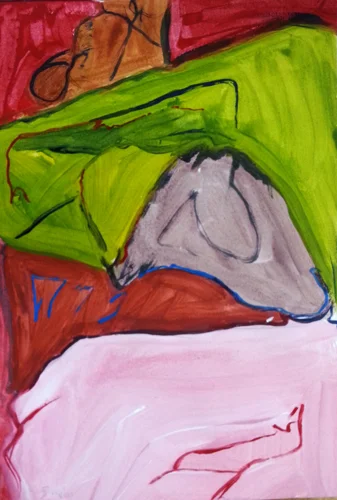
I've been off exploring and seeing my family this Jingly season. It's been great to see everyone once again. I even managed to get some work completed whilst I was away. Then when I was returning I left it all behind me. I have some photos of some of the work I completed below. They were all just little studies done in watercolour and acrylic on cartridge paper.
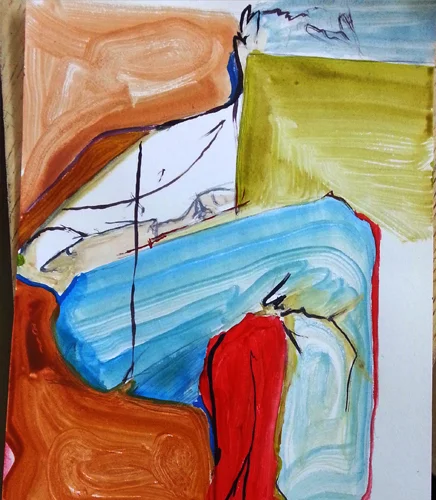
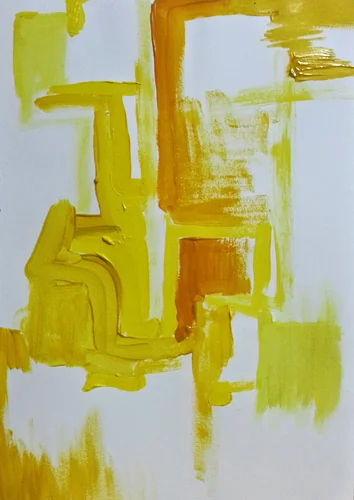
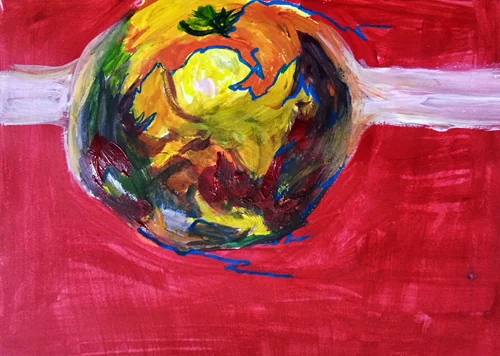
In keeping with tradition I've set myself some 'resolutions' and tasks for the next 90 days. I'm placing them here in public so I can be checked up on.
Targets for the next 90 days:
- Create one new work a day in less than 1 hour.
- Write statements for all projects and series of work.
- Check competitions daily and enter at least 3.
- Complete 17 weekly observational drawings.
- Create at least one blog post a week.
- Update all aspects of my Website.
I don't think that is too ambitious. I have yearly goals too. Sort out an exhibition and complete at least one major work a month.
Conways Loose Life
I've finally finished (I hope) my self portrait. I started off wanting to have a portrait hidden in a pattern, but I moved on to wanting to involve my love of binary, glitch and generative art. My original idea was to have the portrait emerge from a pattern. The work and my ideas developed through the painting process. (of which I have given a brief account of beneath the painting)I'm attempting to play with elements and layers of identity. Below is the finished piece.
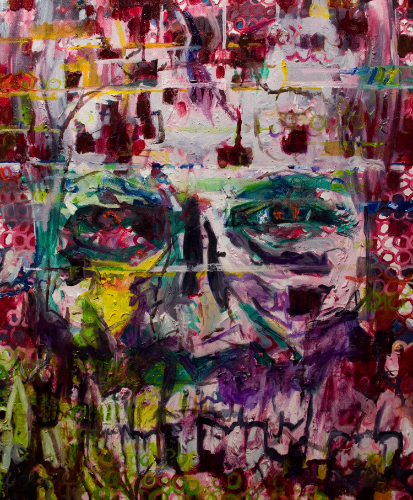
Conway's Loose Life, Oil on canvas, 20" x 24" (51cm x 61cm)
I painted the portrait up to a stage and then photographed it. Uploading the photograph allowed me to play with the photograph digitally. The image was run through a few filters in audacity and had its hexadecimal information altered. The parts of the hexadecimal I altered were converted into binary and were layered on top of painting. Conways game of life rules were applied to the binary on the top third in washes of oil paint. I've placed a really brief video of some of the stages below.
A brief video of the progress of my portrait painting.
Algorithmic Art
I want to try to explain once and for all what it is I’m doing with my Procedural Painting series. There is alot in the actual process of planning and creating the work and I have tried to write the rules of my algorithm down. The only part of the algorithm I have previously written down have been the tables I use. The tables are at the bottom of the ‘Pseudo code’.
Procedural Paintings the ‘pseudo code.’
Before we start on this please remember all of the random variables are calculated by rolling dice.
This is an example of the ‘code’ I have used for my paintings in version 2.0. Each version has a different set of coding rules. I have stripped back some of the complexity of the ‘code ’ because the first draft was horrible to look at and just unreadable.
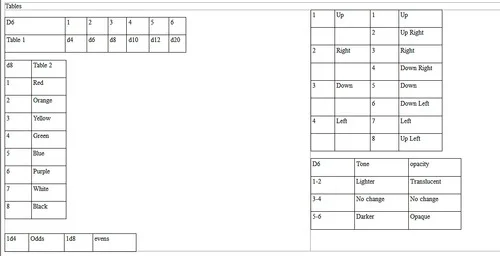
The first thing is to decide how many paintings will be in the series version. For that I roll 1d6 ( I roll 1, 6 sided dice) and consult table 1. Then I roll the dice that has been chosen. That will decide the number of painting s in the series.
For V2.0 I decided to use coloured grounds on each of the canvases. So for each canvas I rolled 1d8 and went to table 2.
Each painting consists of Layers, Stages and Steps. The Steps have 3 sections to them:
Direction -which can be either 4 points of movement or 8 (see table3)
length – which is calculated using table 1 and rolling the specified dice for the value.
Thickness of brush stroke – see table 4 details of each brush stroke, its length, direction and thickness.
The stages are either linked together or separated based on an odds evens roll. Each new start point for a stage is a random point on the border of the painting. At each new start point of a stage the opacity and tonal values of the paint is randomised.
When all the stages in a layer have been completed. A random number of rectangles, the size , opacity and tonal values of which have been randomised.
The next layer and its stages and steps are painted over this, and so on until the last step has been followed.
Over the course of a painting mistakes will happen, I might misread a line and paint a step right 5cms instead of left. If this happens I follow the steps to the end of the stage for both the mistake and the correct series directions. The mistake is dry-brushed to highlight it as different.
I hope that is manages to clear up some of the process. If you need more clarification then please ask away.
(edit- I added the image below and the tables lost their format, so I took a screen shot instead.)
The image below has the tables referred to in the text.
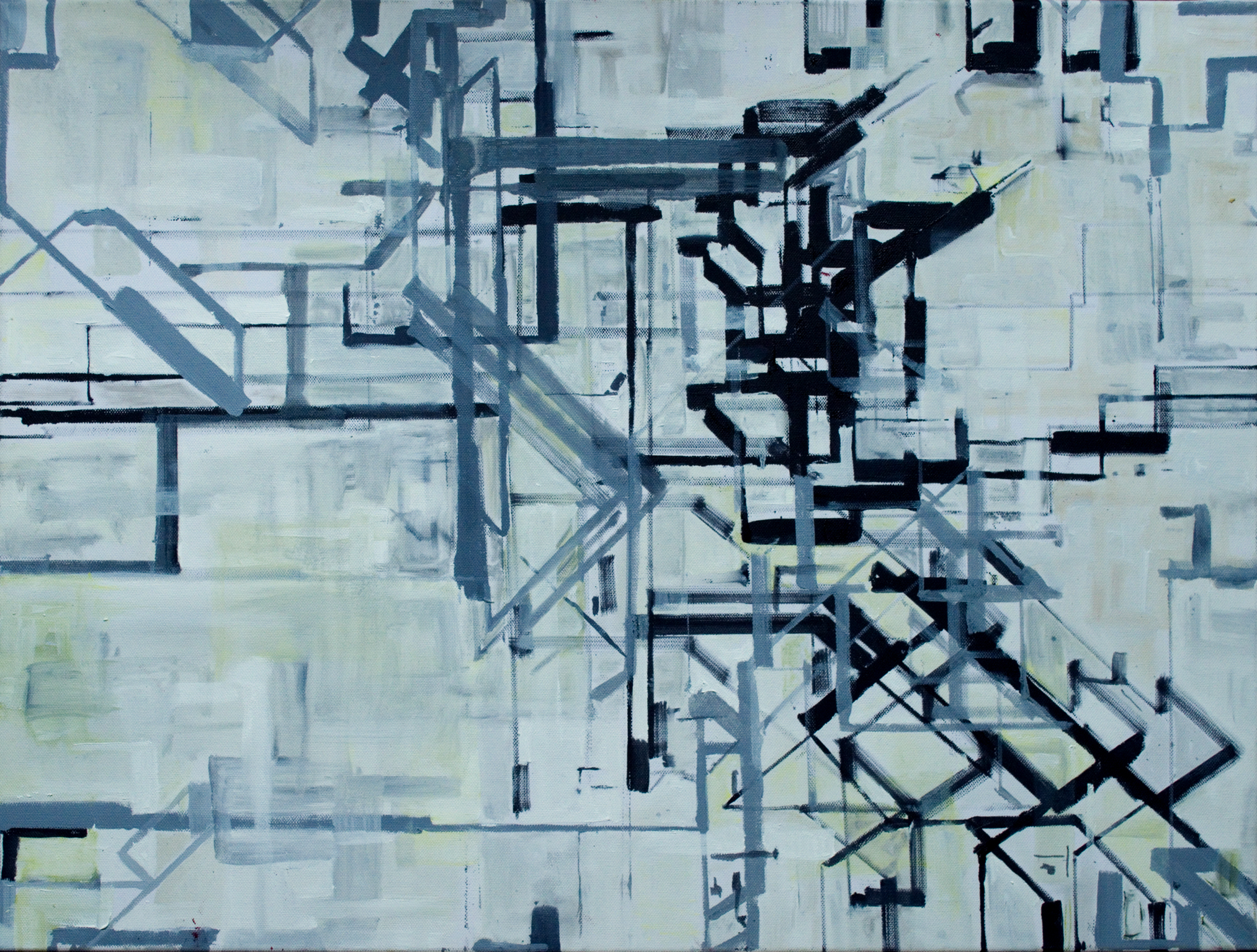
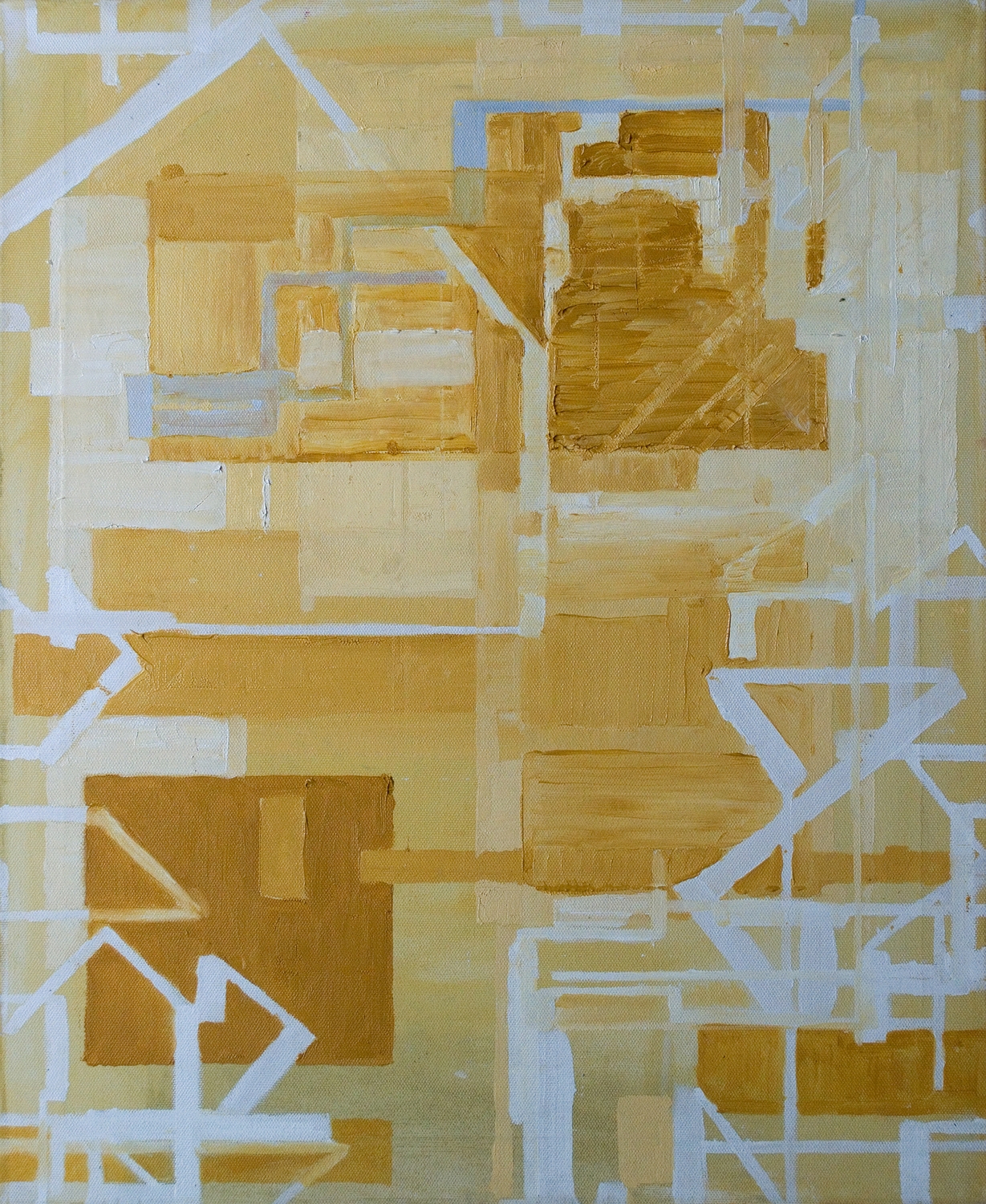
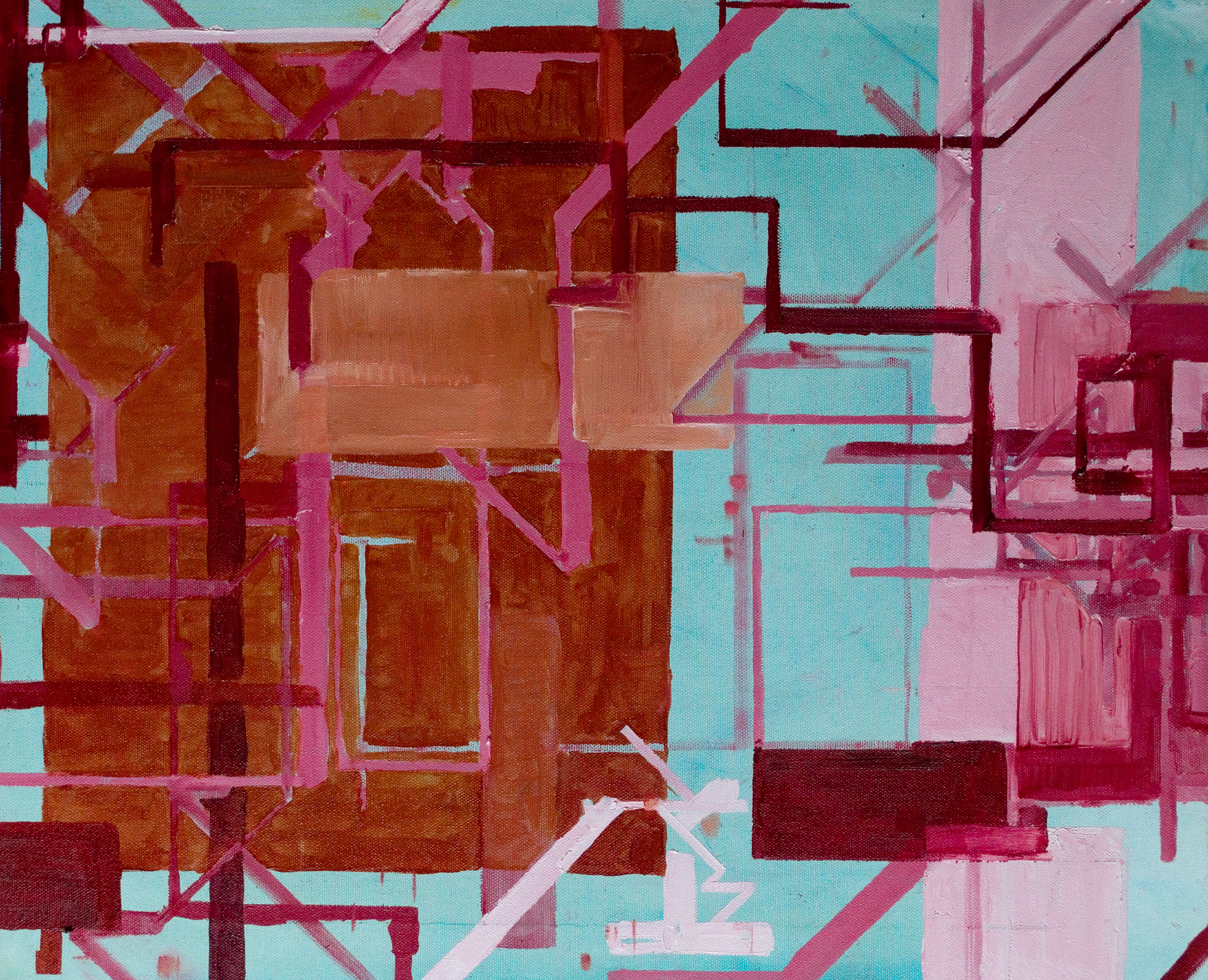
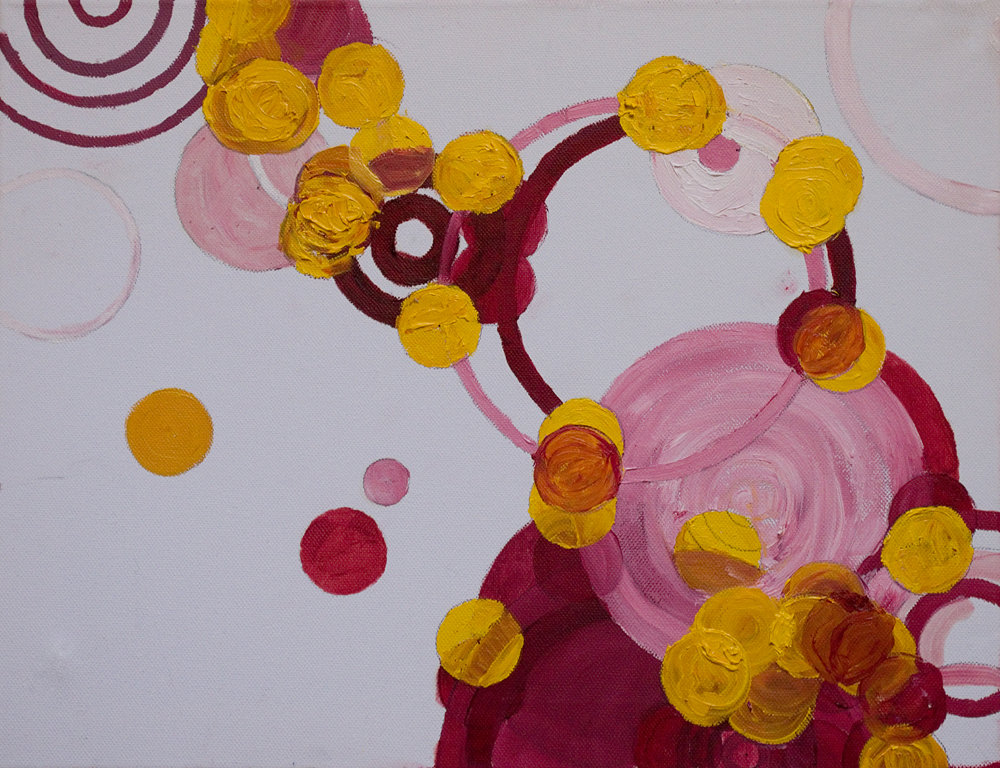
The paintings below have been created using variants of the above algorithm.




Stuff and Guff
Soundcloud is where I put my sonic dreams. When I make them.